Leveraged Buyouts in 2026: How the Math Works, Where Returns Come From, and What Breaks Them
How leveraged buyouts work in 2026: capital structure, a worked LBO with return attribution and stress tests, the interest deduction limit, and why deals fail.

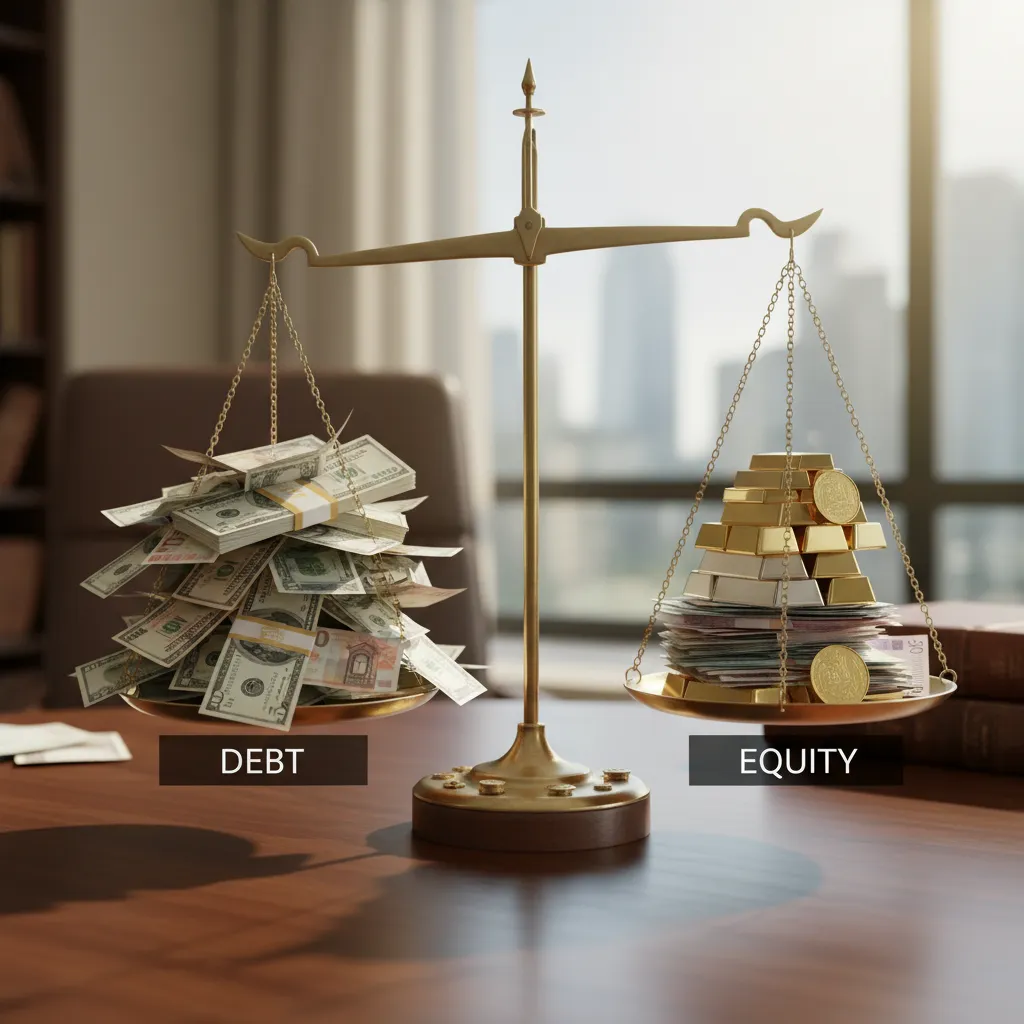
In a leveraged buyout, a buyer, usually a private equity firm, purchases a company using a mix of its own equity and debt that the company itself must repay. The debt magnifies the result in both directions. If the company grows and pays down what it owes, the equity can be worth several times what was invested; if earnings slip while interest keeps coming due, the equity can be wiped out.
The business has changed since the last cycle. Debt is a smaller share of purchase prices, interest costs are higher, private credit funds have taken over much of the lending, and firms are holding companies longer because selling them has been hard. This guide covers how LBOs are financed in 2026, a worked example that shows where returns come from and how they break under stress, the tax limit on interest deductions, the ways deals fail, and what the exit backlog means for investors.
How an LBO is financed
| Layer | Typical form | Priority | Cost |
|---|---|---|---|
| Senior secured debt | Syndicated term loans, or a unitranche loan from a private credit fund | Paid first; secured by the company's assets | Floating: SOFR plus a spread |
| Junior debt | Second-lien loans, mezzanine debt, high-yield bonds | Paid after senior lenders | Higher fixed or floating rates, sometimes with warrants |
| Preferred or holding company debt | Often pays interest in kind (added to principal) | Behind all operating company debt | Highest of the debt layers |
| Equity | Sponsor equity plus management and seller rollover | Paid last; keeps all gains after debt | No fixed cost; the target return |
The mix has shifted toward equity. According to PitchBook data cited by The Lead Left in August 2026, median net debt was 4.7 times EBITDA in 2025, below 5.2 times in 2021, and the equity check per turn of EBITDA rose from 4.5 times to 7.8 times over a decade. Debt went from roughly half the purchase price to about a third. Two forces drove that: purchase multiples stayed high, and with the secured overnight financing rate near 3.9% in September 2026, floating-rate debt at SOFR plus 4 to 6 points costs far more than it did in 2021, which limits how much a company's cash flow can support.
A worked example
An illustration of a buyout, with simplified assumptions:
- The company earns $50 million of EBITDA and is bought for 11 times EBITDA, or $550 million.
- Debt is 4.5 times EBITDA ($225 million, about 41% of the price) at 8.88%, which is SOFR of 3.88% plus a 5-point spread. Equity is $325 million.
- EBITDA grows 5% a year. Capital spending equals depreciation at 15% of EBITDA, the tax rate is 25%, working capital doesn't change, and all free cash flow repays debt.
- The company is sold after five years at 11 times EBITDA. Transaction fees and fund fees are ignored, so these are gross deal returns.
| At purchase | After 5 years | |
|---|---|---|
| EBITDA | $50.0 million | $63.8 million |
| Enterprise value | $550 million | $702 million |
| Debt | $225 million | $101 million |
| Equity | $325 million | $601 million |
| Multiple of equity invested | 1.85x | |
| Internal rate of return | 13.1% |
The $276 million gain came from two sources: EBITDA growth of $13.8 million, worth $152 million at 11 times, and $124 million of debt repaid from cash flow. The multiple did not change, so it added nothing. Bought with all equity, the same company would have returned 1.61 times, or 10.0% a year, counting the cash it built up. The debt added about 3 points a year of return in exchange for the risk shown below.

How the same deal breaks
| Scenario | Equity after 5 years | Multiple | IRR |
|---|---|---|---|
| Base case | $601 million | 1.85x | 13.1% |
| Sold at 9.5x instead of 11x | $505 million | 1.55x | 9.2% |
| Interest rates 2 points higher throughout | $579 million | 1.78x | 12.2% |
| EBITDA flat, sold at 10x | $368 million | 1.13x | 2.5% |
| EBITDA flat, sold at 10x, with 6x debt at purchase | $254 million on $250 million invested | 1.01x | 0.3% |
A few lessons follow:
- Earnings and the exit multiple matter more than the interest rate. A 2-point rate increase cost less than 1 point of IRR here, while flat earnings and a modest multiple decline cut the IRR by 10 points.
- More debt raises the upside and removes the margin for error. With 6 times debt, the base case would have returned 1.95 times, but flat earnings leave the equity roughly where it started after five years.
- Interest coverage is the early warning. In year one, EBITDA covers interest 2.6 times in the base case, 2.1 times with rates 2 points higher, and 2.0 times with 6 times debt. A 20% drop in EBITDA from there puts coverage near the levels where lenders start to worry and covenants, if the loan has them, come into play.
- Holding period changes the IRR even when the multiple doesn't. The base case's 1.85 times earned over seven years instead of five is about 9.2% a year.
The interest deduction limit
Section 163(j) caps deductible business interest at 30% of adjusted taxable income. From 2022 through 2024, that income was measured after depreciation and amortization, roughly EBIT, which tightened the cap for capital-intensive and heavily indebted companies. The One Big Beautiful Bill Act permanently restored the EBITDA-based measure for tax years beginning after December 31, 2024, and from 2026 it also treats most capitalized interest as subject to the limit.
In the example, year-one interest of about $20.0 million exceeds the cap of $15.75 million (30% of $52.5 million of EBITDA); under the old EBIT-based rule the cap would have been about $13.4 million. The disallowed interest carries forward and is deducted in later years as debt falls, so the difference in exit equity here is only about $2.4 million. For companies that stay heavily indebted for longer, the carryforward can build up for years.
What breaks leveraged buyouts
- Falling or cyclical earnings with fixed debt. Toys R Us was bought for $6.6 billion in 2005 by Bain Capital, KKR, and Vornado and filed for bankruptcy in September 2017 with about $5 billion of long-term debt, as competition from Walmart, Target, and online sellers squeezed its sales. Energy Future Holdings, the $45 billion buyout of TXU in 2007 and the largest LBO on record, filed for bankruptcy in 2014 after natural gas and wholesale power prices fell.
- Refinancing walls. Loans that mature in a year of high rates or tight credit markets can force expensive extensions or a restructuring.
- Adjusted EBITDA. Purchase prices and debt limits are often based on EBITDA with add-backs for expected cost savings and one-time items. If those savings don't happen, the true debt load is higher than it looked.
- Dividend recapitalizations. Borrowing more to pay the sponsor a dividend returns cash early and leaves the company with more debt.
- Liability management. When companies struggle, sponsors and some lenders increasingly restructure out of court, sometimes moving collateral or priority away from other lenders. Courts have split on the tactics: in December 2024 the Fifth Circuit ruled against Serta Simmons' deal, while a New York appellate court allowed Mitel's. Distressed exchanges made up about half of all defaults tracked by S&P from 2023 through 2025. Our guides to distressed debt, high-yield bonds, and private credit cover the lender side.
The exit backlog
Selling is where LBO returns are realized, and it has been slow. Bain's Global Private Equity Report 2026 counted 32,000 unsold portfolio companies worth $3.8 trillion. Buyout holding periods at exit had risen to about seven years, from five to six years between 2010 and 2021, and distributions to investors were about 14% of net asset value in 2025, below 15% for a fourth straight year. Firms have turned to continuation vehicles, which move companies from an old fund into a new one they also manage, and to partial sales and fund-level borrowing to return cash.
For investors in buyout funds, that means cash comes back later than the fund's projected IRR implies, and a fund's reported value depends on appraisals of companies that have not been sold. Our guides to private equity for individuals, private equity due diligence, and value creation cover evaluating funds and managers.
If you are selling your company to a buyout firm
- Ask how much debt the buyer plans to put on the company, and at what rates. It affects the company's ability to invest, and your rollover equity, if you keep some, sits behind that debt.
- Understand how the buyer calculated EBITDA and the multiple, including any add-backs, and how an earnout or rollover changes what you are really paid.
- Get advice on the tax treatment of rollover equity and earnouts before signing. Our guides to business valuation, M&A strategy, and M&A due diligence cover the process.
Questions to ask about any buyout
- How much of the expected return depends on selling at a higher multiple than the purchase price?
- What happens to interest coverage if EBITDA falls 20%?
- How much of the EBITDA is adjusted, and how likely are the add-backs?
- When does the debt mature, how much is floating rate, and is any of it hedged?
- What do the loan documents allow the sponsor to do if the company struggles?
- Who are the likely buyers at exit, and what would they pay today?
This guide is for informational purposes only and does not constitute investment, tax, or legal advice. Leveraged buyouts carry high risk, and private equity funds are illiquid and generally limited to accredited investors. Market figures are as of September 2026; the buyout model and scenarios are illustrations with simplified assumptions. Consult qualified financial, tax, and legal advisers before investing in or selling to a buyout fund.
Frequently Asked Questions
Share this article
Related Articles

Private Debt: Strategic Business Funding
A borrower guide to direct lending: who qualifies, 2026 pricing, how much debt a company can carry, covenants, call protection, and what happens in trouble.

M&A Due Diligence in 2026: Earnings Quality, Working Capital, Cyber Risk, and Deal Terms
How M&A due diligence works: a worked quality of earnings and working capital example, contract and cyber checks, 2026 HSR rules, and escrows and RWI.

Mezzanine Financing in 2026: What It Costs, How PIK and Warrants Work, and When It Beats Selling Equity
How mezzanine debt works for mid-sized companies: where it sits, its real cost with PIK and warrants, a worked comparison with selling equity, and key terms.

Alternative Investments: How to Size Them, What They Cost, and How Liquid They Really Are
A practical guide to alternatives: who can invest, fee math, capital calls, why smoothed returns mislead, and what the 2026 private credit gates showed.